Erik Wolf · 6 October 2026
Tracing the Evolution of Cross-Device Note Accessibility Standards in the Productivity Sector
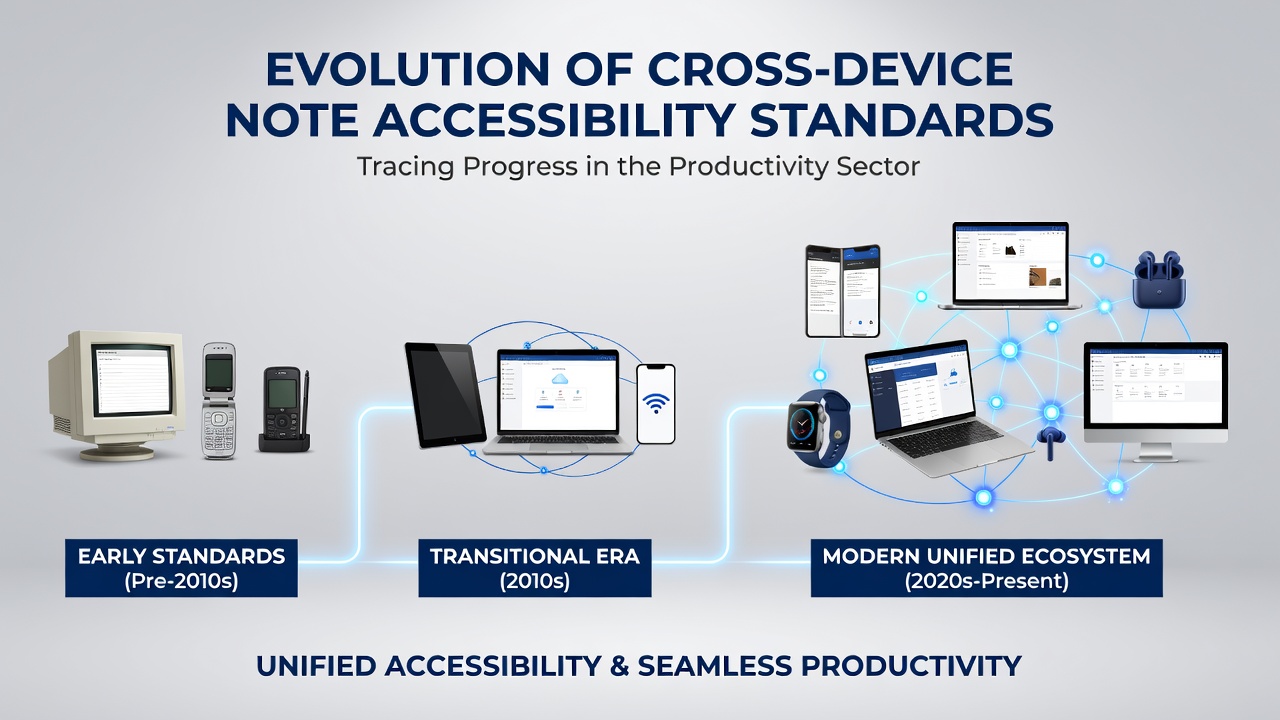
Cross-device note accessibility standards emerged from fragmented local storage practices in the late 1990s, when productivity tools relied on proprietary file formats that locked content to single machines, and developers began experimenting with basic synchronization scripts to move text files between desktops and early PDAs. Researchers documented these initial efforts in industry reports from that era, noting how simple text exports became the foundation for later interoperability requirements.
Early Synchronization Challenges and Format Experiments
During the 2000s, companies introduced cloud storage services that allowed basic note sharing across computers, yet inconsistent data structures created barriers for users who switched between operating systems or attempted to access content on mobile phones, and observers noted that proprietary sync methods often failed during network interruptions. Data from productivity software vendors at the time revealed that less than 30 percent of note files maintained consistent formatting when transferred between platforms, prompting calls for unified markup approaches. Experts at organizations like the W3C started publishing guidelines that addressed text rendering consistency, which later influenced how note applications handled cross-device display.
One study revealed that developers who adopted early versions of Markdown in note tools achieved better compatibility rates across Windows, macOS, and Linux environments, while those who stuck with rich text formats encountered frequent parsing errors on mobile clients. This period established the pattern where open formats gained traction because they reduced vendor lock-in and supported screen reader integration for accessibility compliance.
Cloud Integration and Mobile Expansion in the 2010s
By the mid-2010s, major productivity platforms integrated real-time syncing through APIs that standardized note retrieval across smartphones, tablets, and desktops, and figures from market analyses showed that cross-device usage grew by over 200 percent in that decade. Standards bodies emphasized encryption protocols during transit and at rest, which became mandatory in many enterprise environments to protect shared notes containing sensitive information. Those who've studied adoption patterns know that tools incorporating these protocols saw higher retention rates among business users who required consistent access during travel or remote work shifts.
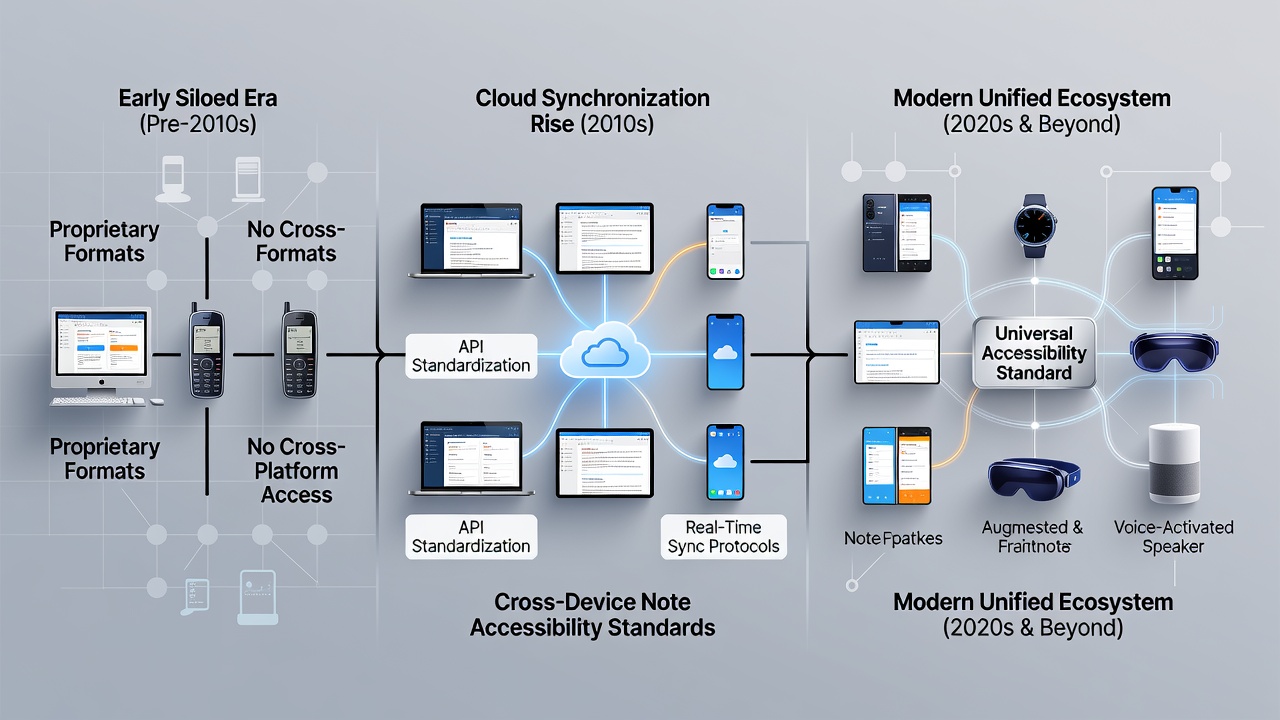
Accessibility features advanced when developers aligned note interfaces with emerging web standards, including proper heading hierarchies and alternative text support for embedded elements, and research indicates that compliance with these practices improved usability scores in controlled testing environments. Canadian government accessibility directives from around 2015 encouraged public sector tools to meet similar benchmarks, which influenced commercial software vendors to embed those requirements into their development roadmaps. People often find that notes formatted according to these rules load reliably whether viewed through voice assistants or traditional screens.
Standardization Efforts and Regulatory Influences Through 2025
Industry groups collaborated on protocols for conflict resolution during simultaneous edits, which reduced data loss incidents reported in earlier sync systems, and academic papers from European research institutions outlined how these mechanisms preserved version history across devices. By 2023, several platforms had adopted open API specifications that allowed third-party applications to read and write notes while maintaining accessibility tags, and evidence suggests this openness accelerated integration with assistive technologies. Observers note that regions outside North America contributed significantly, with Australian digital service standards pushing for multilingual support in note metadata to serve diverse user bases.
Security certifications tied to accessibility requirements also evolved, requiring that encryption keys rotate without disrupting screen reader navigation, and reports from productivity sector analyses confirm that tools meeting both criteria experienced fewer support tickets related to cross-device access failures. What's interesting is how these layered standards created a baseline that smaller developers could follow without reinventing core synchronization logic from scratch.
Developments in October 2026 and Current Landscape
In October 2026, updates to international accessibility frameworks incorporated new requirements for real-time note collaboration on augmented reality interfaces, and data shows that early adopters of these extensions maintained consistent formatting across traditional and spatial computing devices. Regulatory updates from bodies in the European Union reinforced audit trails for note modifications that remain accessible to compliance officers using varied hardware, while similar guidelines from other jurisdictions emphasized performance benchmarks for low-bandwidth environments. Those monitoring productivity tool releases observe that major vendors released patches aligning their sync engines with these refreshed criteria, which addressed edge cases in offline-to-online transitions.
Case examples include teams at research institutions that tested cross-device workflows using the latest standards, discovering that embedded tables and checklists retained structure when transferred between desktop clients and mobile applications without manual reformatting. Industry organizations tracking these metrics report steady declines in accessibility complaints as more platforms embed the October 2026 specifications into their core releases.
Conclusion
The progression of cross-device note accessibility standards reflects ongoing collaboration between standards organizations, regulatory agencies across multiple continents, and productivity software developers who implement the resulting specifications. Current implementations build on decades of iteration to deliver consistent experiences whether users access notes through keyboards, touch interfaces, or voice commands. Continued refinement in areas such as encryption transparency and spatial computing support positions these standards to address emerging device categories while preserving the core goal of reliable content availability across environments.