Casey Griffin · 22 September 2026
Navigating Integration Hurdles When Productivity Tools Adopt New Backend Architectures
Productivity tools continue to evolve their backend infrastructures as demand grows for scalability and real-time collaboration features, and these shifts often involve moves from monolithic designs to microservices or serverless models that introduce compatibility layers between old and new data pipelines. Researchers at various institutions track how such changes affect data synchronization across user devices while maintaining security protocols that comply with regional standards.
Understanding Shifts in Backend Design
Companies managing note-taking applications and task managers frequently migrate to cloud-native setups because legacy systems struggle with increasing user loads, yet the transition demands careful mapping of existing APIs to newer endpoints so that third-party integrations continue functioning without interruption. Data indicates that organizations completing these updates by early 2025 reported fewer downtime incidents when they implemented gradual cutover strategies rather than abrupt replacements.
Key Integration Challenges
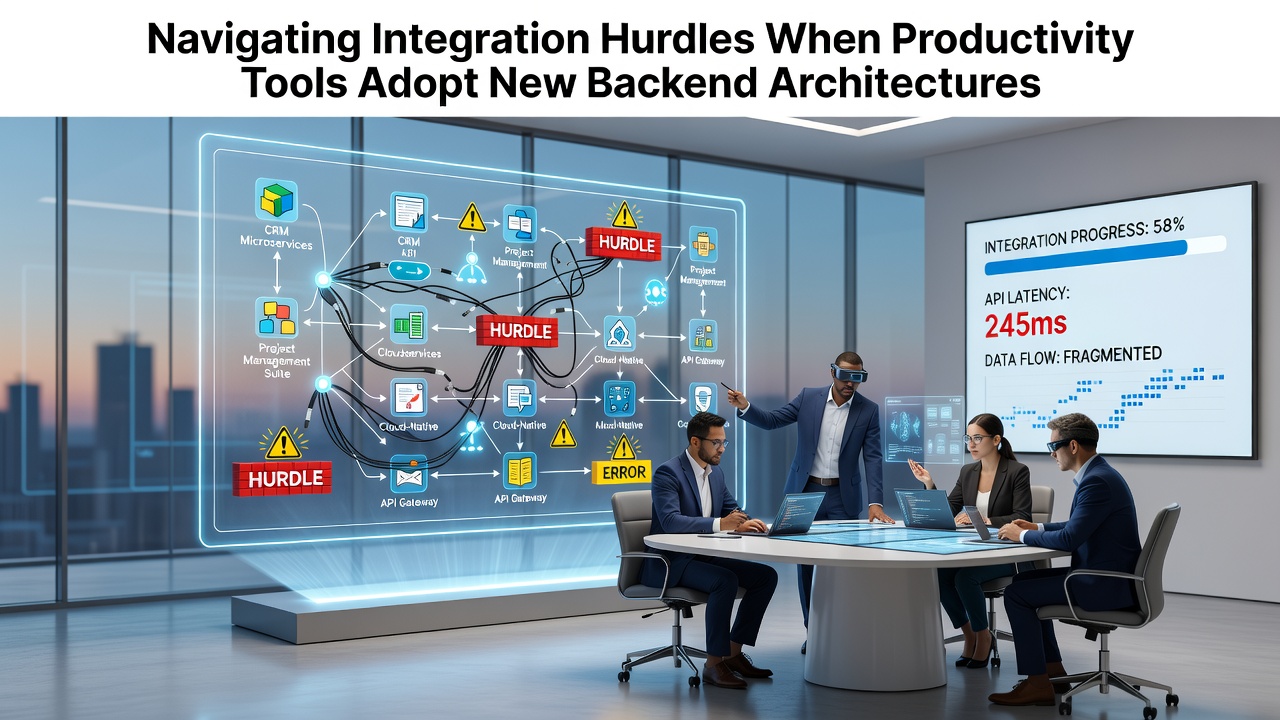
One primary hurdle appears during data migration phases when structured records from older relational databases must align with distributed storage solutions, and mismatches in schema definitions can lead to incomplete syncs across mobile and desktop clients. Observers note that authentication mechanisms also require updates because token-based systems from previous architectures sometimes conflict with newer identity providers that emphasize zero-trust principles.
Performance bottlenecks emerge when legacy plugins attempt to query updated services, while monitoring tools need reconfiguration to capture metrics from containerized environments instead of traditional virtual machines. Studies from academic sources highlight cases where European development teams addressed these issues through standardized testing frameworks that simulate high-concurrency scenarios before full deployment.
Approaches Used in Recent Transitions
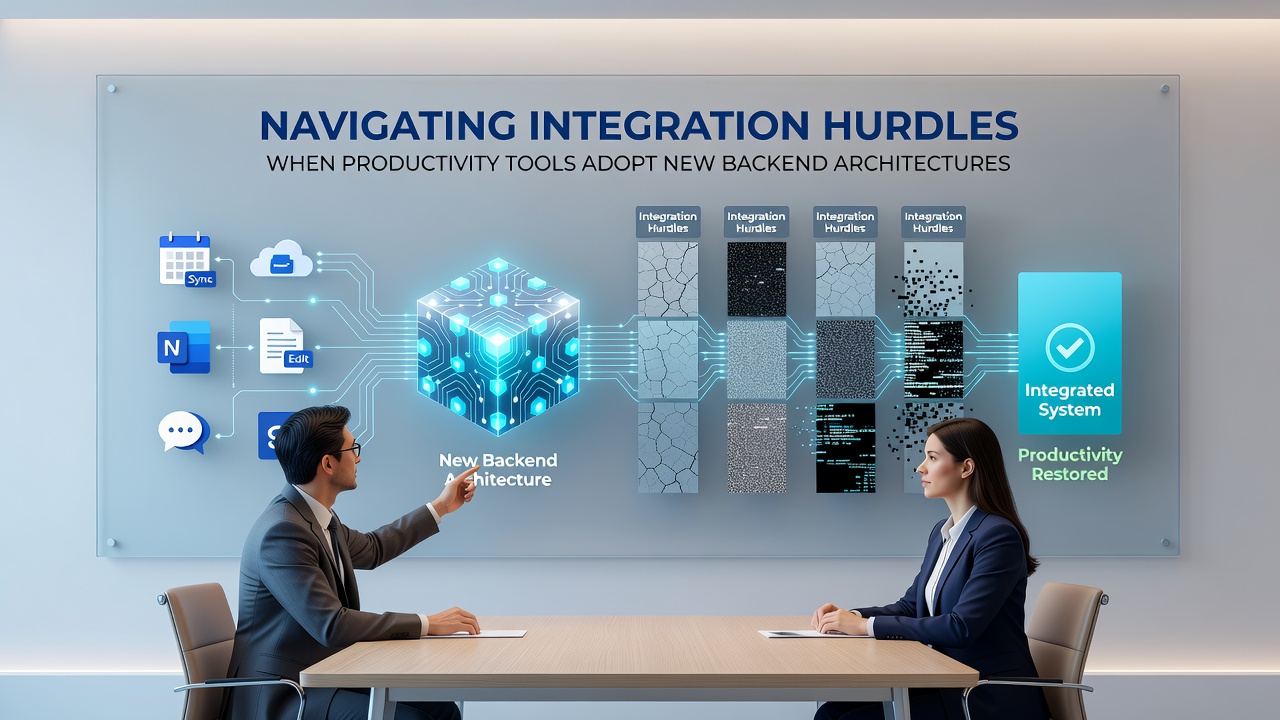
Teams handling these migrations often adopt hybrid environments that run parallel systems for a defined period, allowing gradual validation of data integrity and user workflow continuity. Reports from the National Institute of Standards and Technology outline best practices for documenting API changes so that external developers can adjust their connections in advance of cutover dates.
Additional complications arise around compliance requirements when tools store information across multiple jurisdictions, and backend architects must ensure encryption standards meet both updated domestic regulations and international data transfer agreements. In September 2026 several major platforms plan further refinements to their service meshes, which could affect how productivity applications handle real-time updates and conflict resolution during collaborative sessions.
Case Examples from Industry Shifts
One documented instance involved a popular task management service that restructured its notification system after adopting event-driven architecture, and users experienced temporary delays in cross-platform alerts until caching layers were optimized. Another example from North American providers showed improved scalability once they containerized core services, although initial integration with calendar applications required custom middleware to preserve recurring task patterns.
Academic papers published through Canadian research networks examine how these adaptations influence developer productivity, revealing that teams with established change-management protocols encountered fewer rollback events during the process. Those who studied similar transitions in Australian enterprise settings found that phased user onboarding reduced support ticket volume significantly compared to immediate full switches.
Planning for Ongoing Adaptations
Forward-looking organizations establish dedicated integration testing environments that mirror production backends, and they incorporate feedback loops from early adopters to refine synchronization logic before wider release. Industry reports emphasize the value of maintaining detailed logs during migration windows so that root-cause analysis becomes feasible when unexpected behaviors surface in connected applications.
Conclusion
Productivity tools adopting new backend architectures face predictable integration hurdles centered on data consistency, authentication updates, and performance alignment, yet structured migration plans combined with compliance awareness help mitigate disruptions. As platforms prepare for additional changes scheduled around September 2026, continued attention to testing frameworks and external linkage documentation supports smoother transitions across the sector.