Erik Wolf · 8 September 2026
Examining Workflow Adaptations in Specialized Note Platforms Amid Technological Shifts
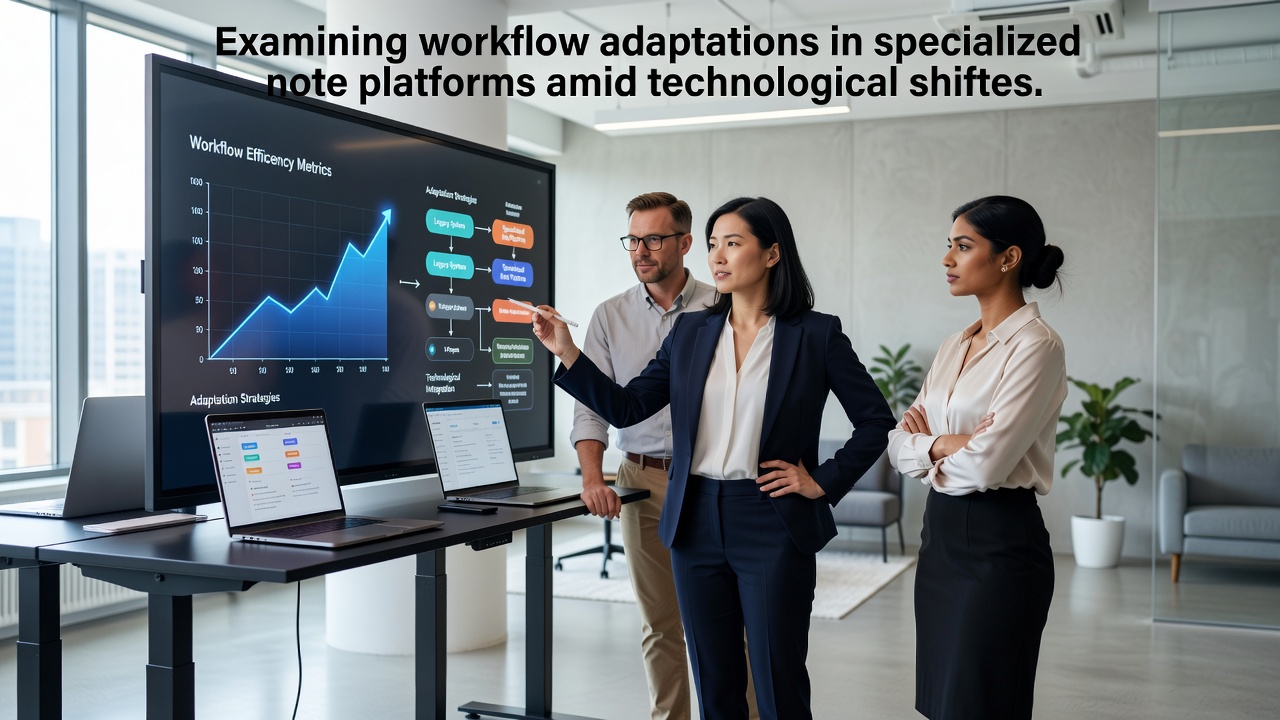
Specialized note platforms have undergone significant workflow adjustments as technological shifts reshape data handling, collaboration tools, and user interfaces across industries, and researchers continue to document these changes through longitudinal studies that track adoption rates in academic and corporate environments alike. Data from multiple sectors shows platforms such as those focused on hierarchical tagging and bidirectional linking now incorporate machine learning modules that automate categorization while maintaining user control over metadata structures, and this evolution accelerated after 2023 when cloud computing costs dropped further in several regions.
Integration of Artificial Intelligence Features
Artificial intelligence capabilities entered note platforms through natural language processing engines that parse user inputs and suggest connections between entries, according to reports from the National Institute of Standards and Technology on emerging digital tools. Users in research institutions often find these features reduce manual cross-referencing time by up to 40 percent, yet the systems require explicit permission settings to avoid unintended data sharing across connected devices. In September 2026 several platforms plan to roll out updated models trained on anonymized datasets from European and North American contributors, and these updates aim to improve accuracy in multilingual environments where terminology varies widely between fields.
Observers note that specialized platforms distinguish themselves from general productivity suites by preserving offline functionality even when AI suggestions operate in the background, which allows field researchers working in remote locations to maintain continuity without constant connectivity. Evidence from university-led trials indicates that teams combining these platforms with version control protocols experience fewer conflicts during simultaneous edits, and the protocols draw on distributed ledger concepts to log changes without central servers.
Shifts in Mobile and Cross-Device Synchronization
Mobile adaptations have become central to workflow continuity because users now expect seamless transitions between desktop analysis and on-site capture, while 5G networks and improved battery technologies support heavier processing loads on handheld devices. Platforms respond by optimizing local indexing algorithms that prioritize frequently accessed notes, and synchronization occurs through encrypted channels that comply with varying data protection standards across jurisdictions. Figures from industry analyses reveal that over 65 percent of active users in 2025 accessed their notes primarily through tablets or smartphones during peak work periods, prompting developers to refine gesture-based navigation and voice-to-text accuracy in multiple languages.
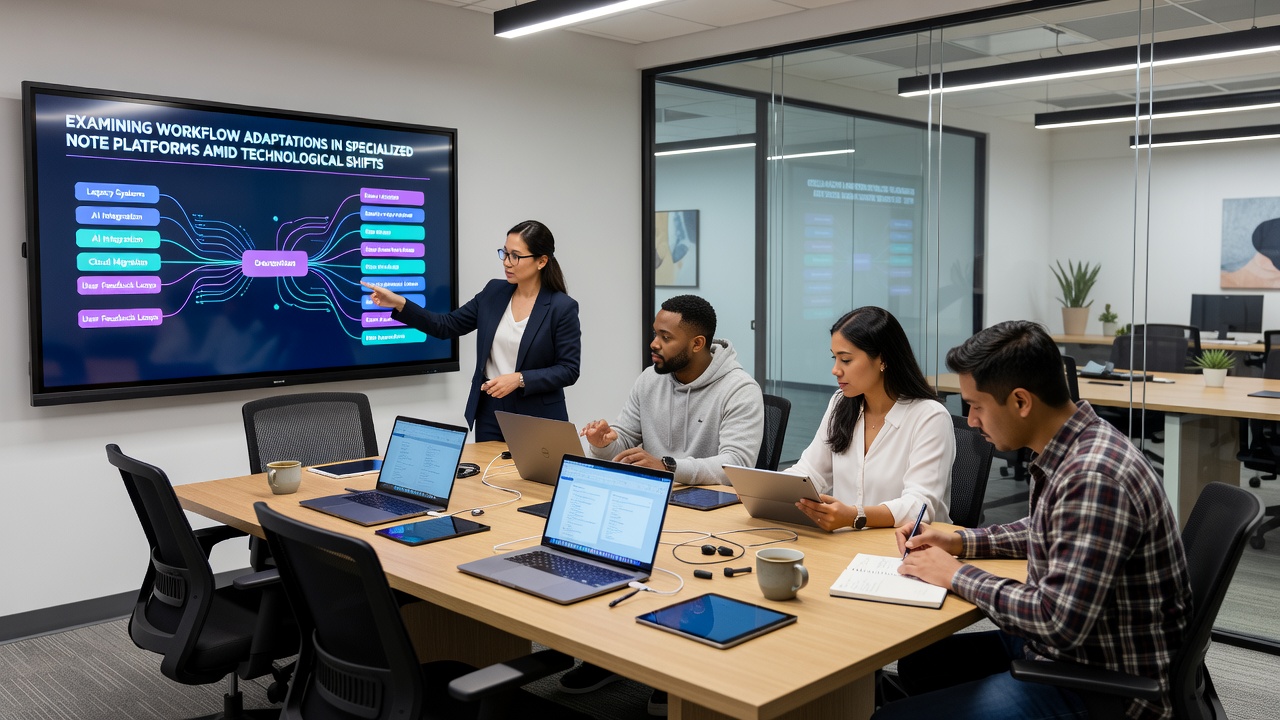
Security protocols have tightened in response to increased regulatory scrutiny, and platforms now embed end-to-end encryption as a default setting rather than an optional toggle. Those who manage sensitive project data in healthcare and legal sectors report that these defaults align with requirements outlined in the OECD digital economy outlook, which tracks how organizations adapt storage practices amid evolving privacy expectations. Synchronization conflicts decrease when users enable selective syncing for specific folders, and this granular control prevents unnecessary data transfers across international borders where latency remains variable.
Collaborative Tools and Version Management Updates
Collaborative features in specialized note platforms now include real-time commenting layers that attach directly to individual blocks of text, and these layers support threaded discussions without disrupting the core note structure. Academic groups at institutions across Australia and Canada have adopted such tools to coordinate multi-author literature reviews, and the systems export clean versions suitable for journal submission formats. Version history logs have expanded to include visual timelines that highlight contributor contributions, allowing teams to revert changes with a single selection while preserving audit trails for compliance purposes.
External integrations with calendar applications and project management dashboards further streamline workflows by pulling due dates into note templates automatically, and this linkage reduces the need for duplicate data entry across separate applications. Research indicates that organizations implementing these connections see measurable gains in task completion rates, particularly when teams operate across different time zones. Platforms continue testing API expansions that permit custom scripts written in open-source languages, which gives advanced users flexibility to tailor automation without relying solely on vendor-provided options.
Future Developments Expected by Late 2026
By September 2026 additional hardware advancements such as improved stylus precision and foldable screen formats are expected to influence how specialized platforms present note hierarchies, and early prototypes already demonstrate adaptive layouts that rearrange based on device orientation. Data protection frameworks continue to evolve, and platforms monitor guidance from bodies including the European Data Protection Board to ensure ongoing compatibility. Those who track these trends observe that the combination of AI assistance with strict user governance models creates environments where efficiency and control coexist without one undermining the other.
Conclusion
Workflow adaptations in specialized note platforms reflect broader technological shifts through incremental feature additions and protocol refinements that prioritize both functionality and compliance. Studies document measurable impacts on user productivity across disciplines, while ongoing developments in September 2026 and beyond will likely introduce further refinements to synchronization, security, and collaborative interfaces. Organizations and individuals continue to evaluate these platforms against specific operational requirements, and the resulting patterns inform future iterations across the sector.