Gisela Griffin · 3 November 2026
Database Switches in Productivity Apps: Maintaining Reliable Searches for Users
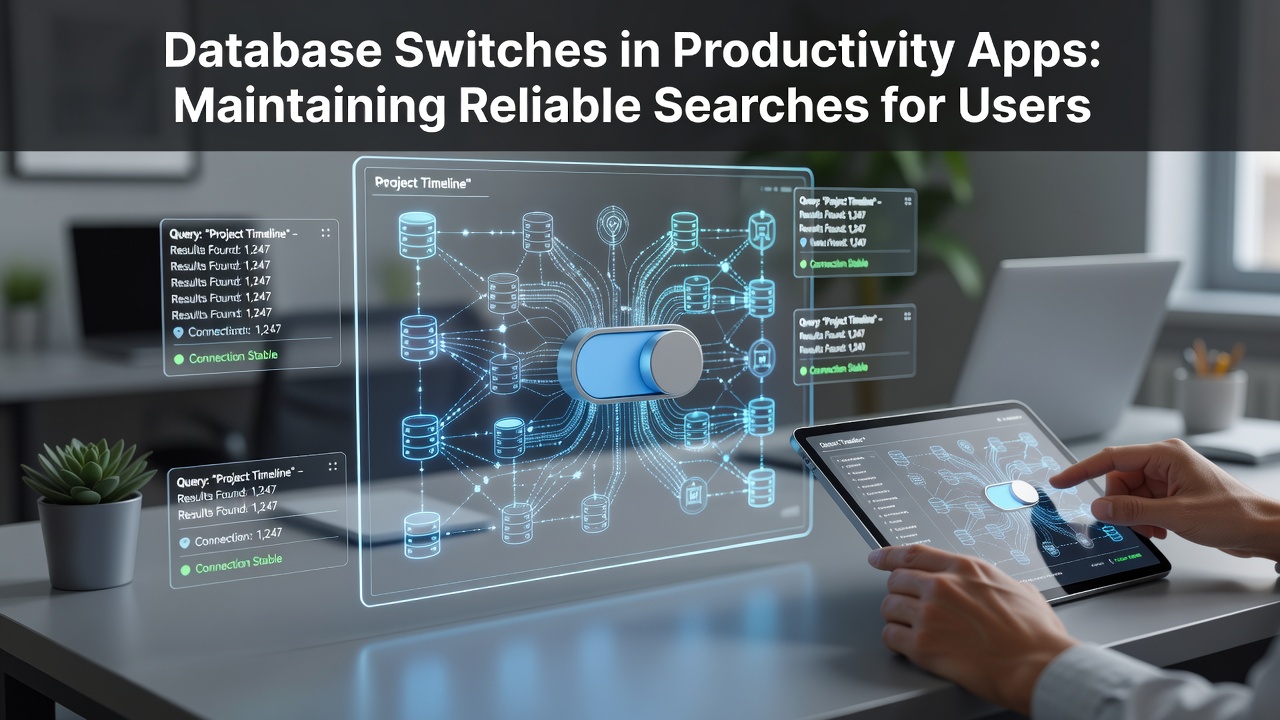
Database switches in productivity apps involve transitions between different database systems while preserving search accuracy and speed for end users, and these changes occur when teams move from relational databases like PostgreSQL to document stores such as MongoDB or adopt specialized search engines alongside primary storage layers.
Core Mechanics of Database Transitions
Teams execute these switches to address scaling needs, reduce costs, or integrate new features, and the process requires careful handling of data models because search queries depend on consistent indexing across old and new structures. Researchers at various institutions have documented how mismatched schemas during migration lead to incomplete result sets until synchronization completes, while observers note that productivity platforms often run dual systems in parallel for weeks to validate outputs before full cutover.
Effects on Search Reliability
Search functions in these apps rely on inverted indexes and real-time query processing, so any interruption in data flow during a switch can produce stale results or missed entries for users who depend on quick lookups of notes, tasks, and documents. Data from industry reports shows that query latency spikes commonly appear in the first hours after migration if reindexing jobs fail to keep pace with incoming writes, and experts have observed that apps handling collaborative editing face extra pressure because concurrent changes must appear consistently in both databases until the switch finalizes.
One documented case involved a task management service that migrated its backend in 2024, and engineers discovered that partial index updates caused some user searches to return outdated task priorities until they implemented versioned query routing that directed reads to the more current store.
Techniques That Preserve Search Integrity
Developers apply several established methods to keep searches reliable, including change data capture streams that replicate writes to the new database in near real time and background jobs that rebuild search indexes without blocking user queries. These approaches allow gradual validation where automated tests compare result sets from both systems, and figures from recent technical analyses indicate that such parallel validation reduces error rates by measurable margins when teams monitor metrics like recall and precision during the transition period.
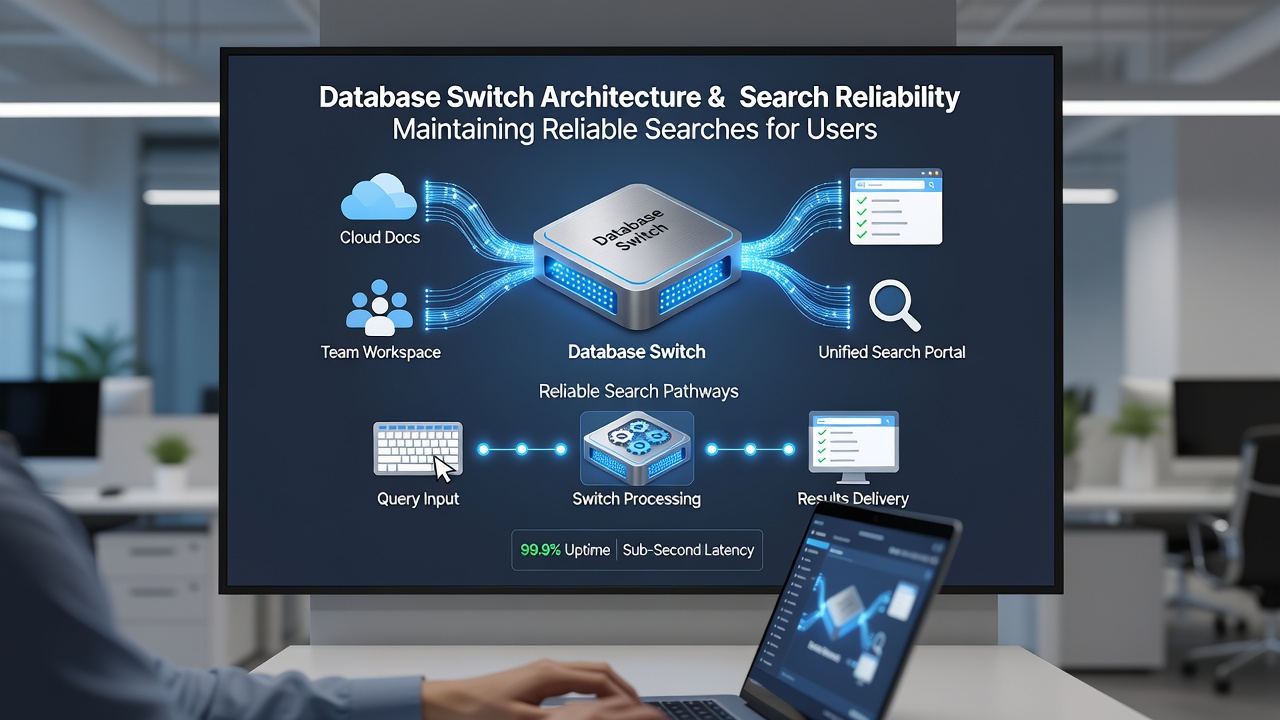
Another tactic involves maintaining compatibility layers that translate queries between database dialects so existing search code continues to function while the underlying storage changes, and this method has appeared in several productivity suites that adopted hybrid architectures combining SQL and NoSQL components. Observers note that successful implementations often include automated rollback triggers that revert traffic to the original database if search quality metrics drop below predefined thresholds during testing phases.
Patterns Observed Across Recent Projects
Productivity app teams have shared details about their switch processes through conference presentations and technical blogs, revealing that most begin with a small subset of user data to test search behavior before expanding rollout. Studies from academic sources highlight how apps that incorporated user-facing feedback loops during migration caught discrepancies faster than those relying solely on internal benchmarks, and one analysis covering multiple platforms found that search-related support tickets rose temporarily but declined once indexing stabilized.
What's interesting is the role of monitoring tools that track query patterns in real time, because these allow teams to identify which search features require extra attention during the switch and allocate resources accordingly. According to research published by ACM, consistent use of such telemetry correlates with smoother transitions in large-scale deployments.
Future Considerations for November 2026 and Beyond
Upcoming updates to database technologies scheduled around November 2026 include enhanced support for live schema evolution in several major platforms, and these changes may reduce the complexity of maintaining search consistency when productivity apps perform switches. Industry groups tracking these developments have noted that new replication protocols under testing could further minimize downtime for search indexes, although adoption timelines depend on vendor release schedules and integration testing by app developers.
Conclusion
Database switches continue to represent a standard evolution step for productivity applications that must balance performance demands with reliable search capabilities, and the methods teams employ to manage these transitions rest on established practices of parallel operation, index synchronization, and continuous validation. Evidence from multiple projects demonstrates that careful planning around data consistency directly supports uninterrupted user access to search results throughout the process, and ongoing refinements in database tooling point toward even more streamlined approaches in subsequent years.